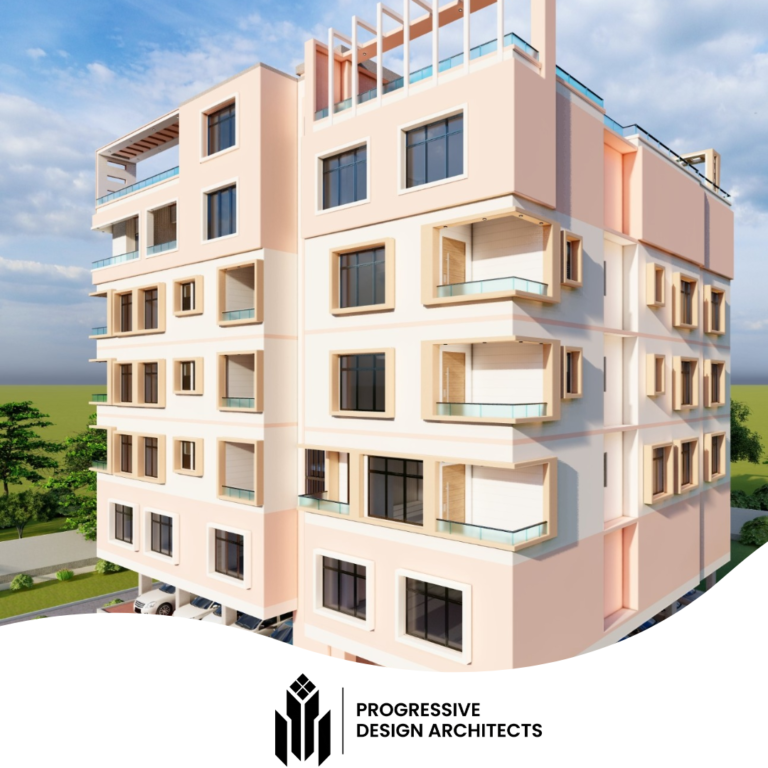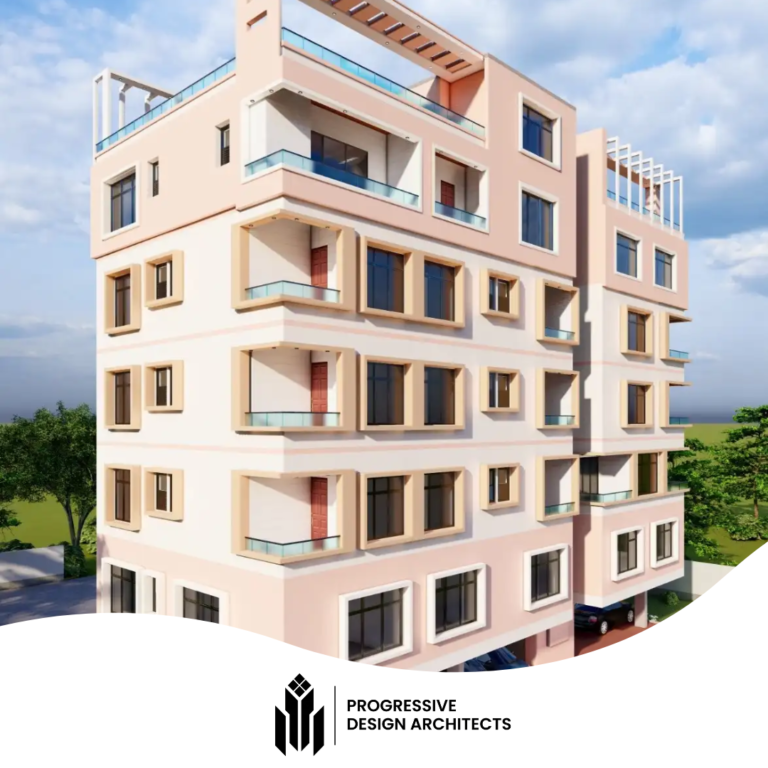
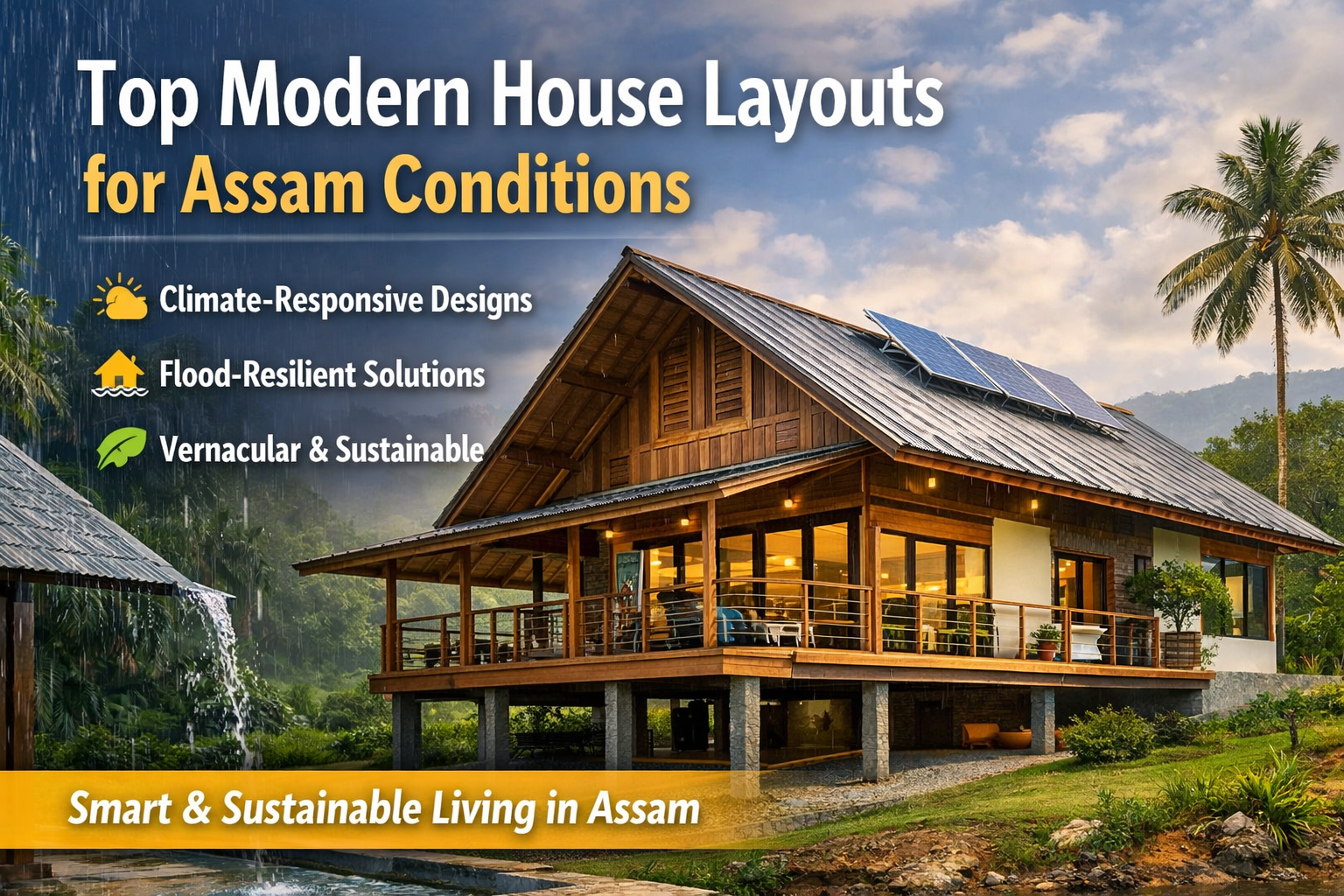
Assam’s unique climatic and environmental conditions, including heavy monsoon rainfall, high humidity, seasonal flooding, and seismic activity, demand residential designs that are functional, resilient, and contextually sensitive. Successful house layouts here are not just visually appealing they integrate passive climatic strategies, vernacular wisdom, and modern aesthetic principles. In this blog, we explore the best modern house layouts suited to Assam conditions, blending tradition with innovation, and referencing design philosophies seen in contemporary architectural practices similar to Progressive Design Architects and PDA Architect approaches.
1. Climate‑Responsive Assam‑Type House Layout (Vernacular + Modern)
The traditional Assam‑type architecture evolved in Assam under environmental pressures heavy rainfall, high humidity, seasonal floods and occasional earthquakes. This vernacular form typically features:
-
Steeply pitched, wide‑overhang roofs that efficiently shed monsoon rain.
-
Raised plinths to prevent water ingress during floods.
-
Wide wraparound verandahs for shade and outdoor living.
-
Lightweight timber or bamboo frames for flexibility under seismic forces.
-
Large windows for cross ventilation and daylight.
Modern layout strategies retain these principles while integrating contemporary needs:
✔ Open floor plan for fluid living/dining/kitchen spaces (boosts natural ventilation).
✔ Central courtyard or light‑well to bring daylight deep into the plan.
✔ Elevated multifunctional veranda zones that double as social or relaxed outdoor spaces.
✔ Flexible interior partitions that accommodate family growth or changing functions.
2. Raised & Flood‑Adapted Modular Layout (Stilt House Inspired)
In flood‑prone areas along the Brahmaputra and tributaries, traditional Chang ghar (stilt house) models elevate the house above flood levels. Modern architects adopt this strategy in a more refined layout:
-
Raised structural modules (deep plinth, columns or stilts).
-
Lower level as versatile space such as garage/workshop/storage.
-
Upper level with living areas placed to maximize daylight and breezes.
-
Ventilated stairwells and semi‑open circulation to enhance airflow.
This layout benefits from a split‑level plan that reduces heat gain while protecting critical spaces during monsoon. Modular design also offers ease of future expansion a concept reinforced in progressive house planning where layouts are staged for future needs.
3. Courtyard‑Centric Greenscape Layout
Integrating a central courtyard works exceptionally well in humid climates. It functions as a micro‑climate regulator enabling light, ventilation, and outdoor connectivity:
-
L‑shaped plans wrap around open courtyards to enhance cross‑ventilation.
-
Skylit court areas bring diffuse light into adjacent rooms.
-
Covered outdoor spaces serve as transitional zones, protecting interiors from direct sun and rain.
-
Green pockets and plantings aid evaporative cooling, crucial for Assam’s humid subtropical conditions.
This layout promotes biophilic design, a principle many modern firms emphasize, where architecture connects occupants to natural landscapes while improving comfort. PDA Architect’s sustainable and context‑driven design ethos aligns with integrating natural elements into spatial planning.
4. Hybrid Traditional–Modern Bungalow Plan
For urban or peri‑urban plots, a hybrid layout blends Assam vernacular features with a modern bungalow aesthetic:
-
Single or double‑storey layout with compact zoning: public spaces at the front, private zones at the rear.
-
Deep verandahs or covered galleries along facades to act as thermal buffers.
-
Strategic window placement for prevailing wind capture.
-
Minimalist interior flow to reflect modern aesthetics while respecting regional performance needs.
This type of plan suits clients who want both contemporary minimalism and climatic functionality reminiscent of forward‑thinking design approaches seen among contemporary architectural practices such as Progressive Design Architects or stylized residential projects that emphasize clean lines, functional layouts, and environmental responsiveness.
5. Sustainable, Tech‑Integrated House Plans
With rising sustainability expectations, modern Assam house layouts increasingly include:
-
Solar‑ready roof planes (especially on steep slopes ideal for rainwater and solar integration).
-
Rainwater harvesting and greywater reuse systems.
-
High‑performance doors/windows with weather seals and shading.
-
Passive cooling strategies through cross‑ventilation and thermal mass balancing.
These features make contemporary homes both resilient against climate extremes and energy‑efficient a key consideration in modern residential design language.
Final Thoughts
When planning house layouts in Assam:
✔ Prioritize ventilation, moisture control, and rain protection.
✔ Respect vernacular wisdom (raised platforms, deep portfolios) while achieving modern spatial qualities.
✔ Balance functionality and aesthetics for both rural and urban contexts.
✔ Explore progressive concepts that allow phased growth and flexible spatial planning.
Assam’s climatic conditions demand not just beautiful homes, but smart, responsive, and future‑ready layouts. Employing a blend of vernacular insights and contemporary design principles with thoughtful attention to site, orientation, and materials will produce houses that are comfortable, efficient, and deeply rooted in their environment.